
“Lost in Translation”
We tend to think of language as simply a means to convey our thoughts. An idea comes to us, we put it into words, and someone else hears or reads those words and extracts our ideas from them. (For English speakers in our modern world where English is so prevalent, the temptation to see language as merely a vehicle is especially strong.)
But language carries more than the ideas we use it to express. The languages we speak shape the distinctions we make, the associations we have with certain words, and even how we perceive and remember our world. A particular word can be loaded with a history and meaning that no translation can quite reproduce.
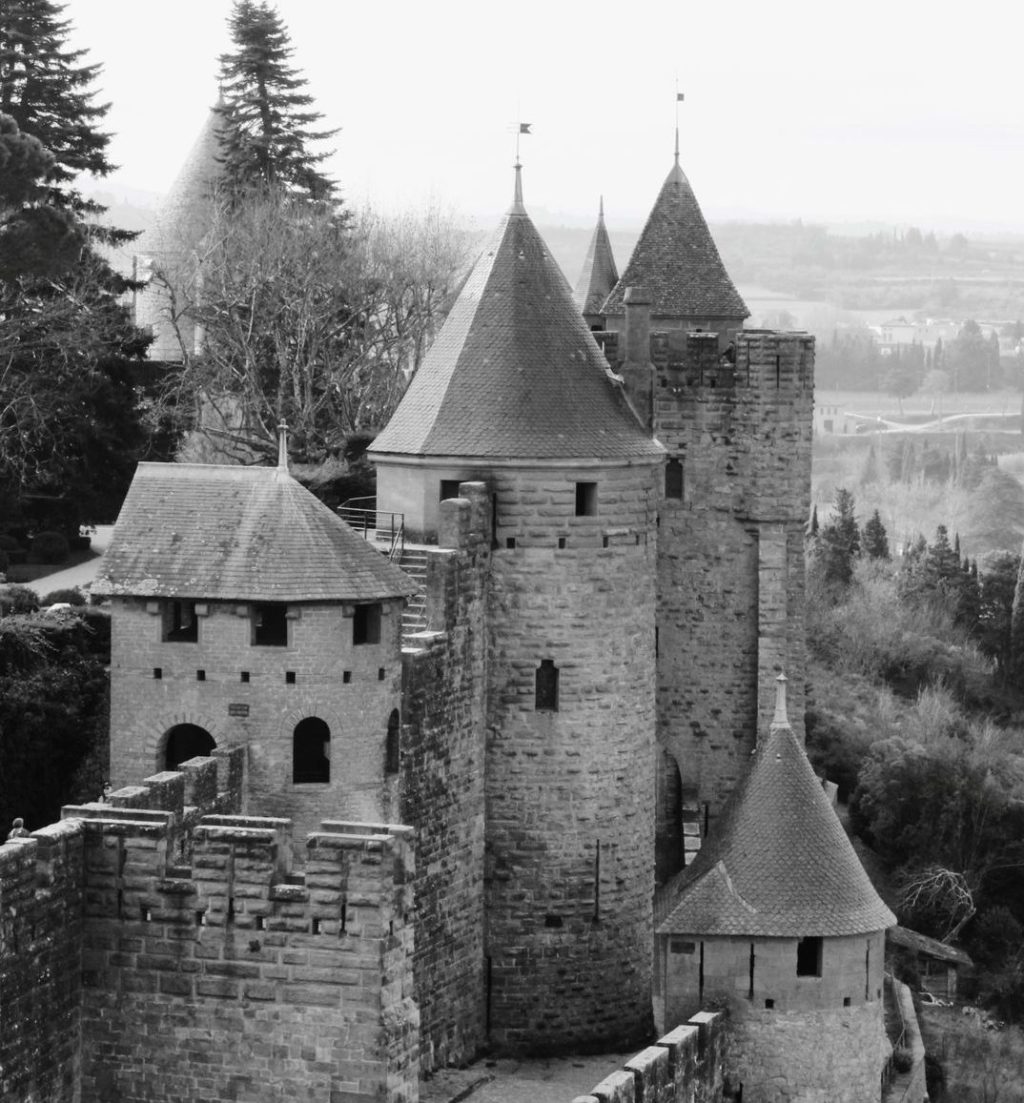
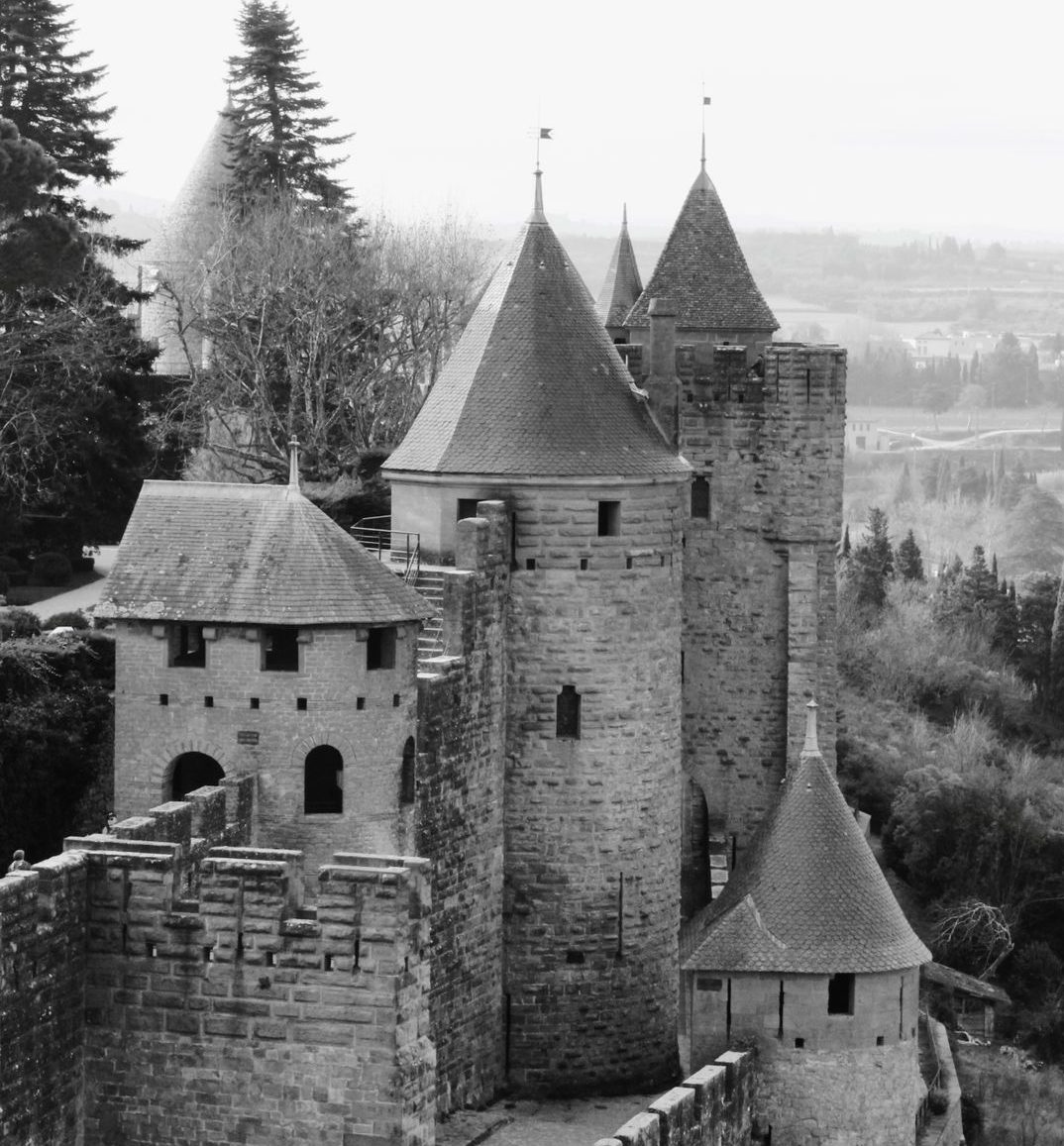
I’ve been thinking about this quite a bit while working on my novel, The Cross of Carcassonne, because my characters speak a language that I can’t simply reproduce on the page. The easy solution would be to simply translate or write my characters’ dialogue in a faux-archaic English if I really wanted to convey the time period. My characters speak a dialect of medieval Occitan; readers receive it all in grammatically tidy English; everyone is happy. Except, something would be lost in this oversimplification.
Imagine growing up hearing one language at home, at church1, in the marketplace, and in the fields. The lullabies of your mother, the songs you sang and games you played as a child, and popular stories you heard by the hearth would all be bound up with that native language.
Now, imagine someone asking you to describe that world in another language… that is, in a small way, the problem I face every time I sit down to write The Cross of Carcassonne.
If you’ve ever studied a foreign language, you know exactly what I’m talking about. You try to capture an idea or describe a memory, but somehow, it’s just not quite right. There is a reason, after all, why most foreign language courses progress from everyday greetings and interactions to discussing ideas only after a great deal of study. You wouldn’t begin learning Danish by discussing how the memory of your grandmother’s biscuits and gravy on a Sunday morning made you feel.
So, how do I, as an author, convey some of the depth of feeling, personality, and memories present in my characters while still keeping my novel readable to a modern audience? This is one of the peculiar problems of writing historical fiction2, and there is no single answer. Every writer has to decide how much of the linguistic world of the past to bring onto the page and how much to translate for the reader.
Some authors choose to translate their characters’ speech almost entirely into modern English, relying on cadence, vocabulary, and characterization to establish who they are and when they lived. Hilary Mantel is a good example. Others deliberately introduce archaic vocabulary or syntax to create a greater sense of distance from the present; Elizabeth Chadwick and Adam Thorpe take this approach. And then there are the intrepid few who push much further, making extensive use of archaic language or even another language altogether, as Paul Kingsnorth and Patrick O’Brian have done in very different ways.
For The Cross of Carcassonne, I have chosen the middle ground, but even that becomes complicated when the language itself — Occitan — isn’t as straightforward as I initially imagined. To describe the language spoken around Pezens, France in the 13th century as “Occitan” is really an inadequate shorthand.
When I first began researching the language of my characters, I made the same assumption many modern readers probably would: that Occitan was simply the language of southern France. But the more I learned, the more complicated that picture became. Multiple dialects existed at the time, and even something approaching a standardized Old Occitan is different from Modern Occitan in its spelling and some key vocabulary. This has provided many fascinating avenues for research, but also more than a few headaches. (Heavily editing five chapters of dialogue because I used the modern forms of address was more than a little frustrating.) In addition, there are characters from other parts of France and Spain in the novel due to the complicated political and religious environment at the time, and I have had to make decisions about how to treat the way they spoke as well.
In every decision I have made about what to translate and what to leave in the characters’ language in The Cross of Carcassonne, I have been guided by a single question — how can I remind my readers that Biatris [the protagonist] experiences her world differently from the way we experience ours?
Practically, this looks like appropriate forms of address in dialogue, using Old Occitan words for things without easy modern English equivalents, prayers partially in Latin or Old Occitan, and archaic forms of names. These are touch points for the memories Biatris would have held dear. The traveling priest is fraire. Of the many words in use in French and Old Occitan at the time for a priest, only this word conveys what Biatris would have understood this particular priest’s role to be. The young women at the heart of the novel are donzelhas. They are more than just young women; they are very minor nobility who understand their precarious political positions while still enjoying the courtesy required by social customs at the time. These are loaded words. They convey more than just the ideas of “priest” and “young woman.”
It would be impossible to faithfully reproduce the world of my protagonist through language. My book must be readable to modern audiences, and if I ever want to share the story with the world, I must make timely decisions about which forms of Occitan words I will use without getting bogged down in the endless nuance of an archaic form of a foreign language. I must make meaningful choices.
I don’t expect my readers to come away from The Cross of Carcassonne knowing Old Occitan, nor do I expect every word to carry all of the associations it would have carried for Biatris. What I hope is that, every now and then, a word or phrase will make the reader pause for just a moment and remember that they are looking into a world that is not their own.
Because ultimately, that is what draws me to historical fiction in the first place. The past is familiar enough for us to recognize the people who lived there, but strange enough to remind us that they were not simply people like us wearing different clothes. They had different languages, different assumptions, different memories, and they experienced their world on their own terms.
I can’t recreate Biatris’ world completely, but I can leave a few doors open into it.
- Contrary to popular belief, a medieval church was not solely a place of completely incomprehensible Latin. Besides the many cognates between Romance languages and Latin, the homily given during mass or sermons delivered in/near the church outside of mass were always in the local language. The Church wanted people to understand what was being taught and there are many surviving examples of sermons, prayer books, etc. in the vernacular from throughout the medieval period. ↩︎
- I recognize that this is also a problem which somewhat faces authors writing in English about contemporary events in places where the spoken language is not English. I would argue, however, that the unfamiliarity of a different time period creates additional challenges. ↩︎


Leave a comment