
Autumn is always my busiest time of year. It’s the time of year that practically bursts at the seams with activities, opportunities, social functions, and preparations for the cozy, slower days of winter. Yet, I still love it. Even when I feel like I’m being pulled to pieces by the frenetic need-to-do-ness of it, autumn is still my favorite.
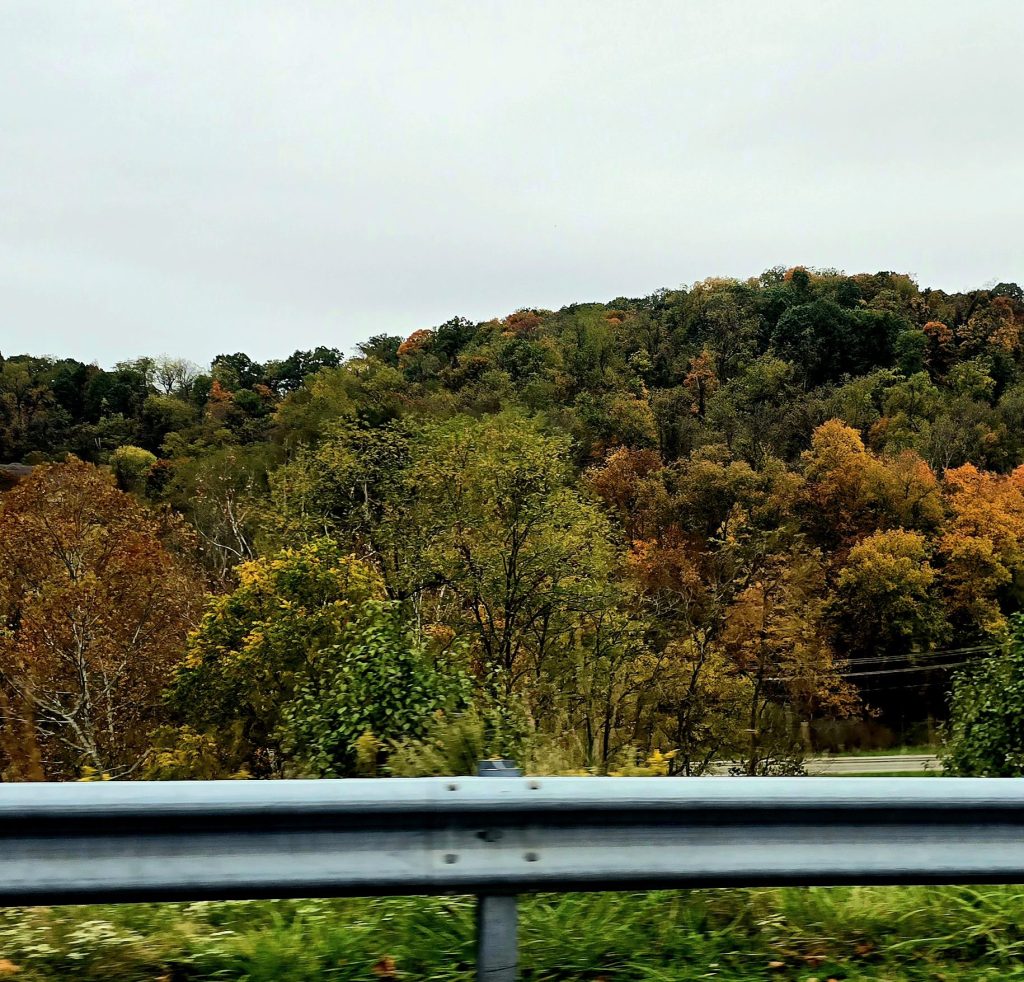
Here in western Pennsylvania, we are quickly approaching peak leaf season. The bright yellows of early autumn are littering the ground and the persistent leaves in the trees are turning fiery shades of orange and red. They are distractingly beautiful. At times in the car, I stop my children mid-sentence to announce, “The trees are so beautiful!” The children sigh, agree, and continue on, but I am left struck by the thrill of God’s glory being manifested in plain sight. And perhaps that is why I love autumn so much, in spite of all of the trouble it arguably causes me.
In the autumn, I feel as though each lovely leaf raining down is a signal grace from God reminding me of his love, his presence, and that He can make beauty out of change, decay, and even death. Medieval poets knew this, and much has been made in literature and song of the symbolic link between the seasons and Christ’s life, passion, death and resurrection. The Church’s liturgical seasons mirror the Northern Hemisphere’s natural seasons for a reason.
We have become quite disconnected from the natural seasons in modern times and, I believe, have lost some of our ability to appreciate the beauty of change. Many people have written about this for the past few decades, so I won’t belabor the point, but one thing that I think is often missed is the effect of mass culture. Yes, we are tied increasingly to technology and disconnected more and more from nature. Wordsworth was already lamenting that fact over 200 years ago. But, we are also losing our sense of our immediate location as we disconnect from nature.
Scientists from weather services and astronomical observatories tell us when meteorological fall begins or that we mustn’t call it autumn until after the equinox. But, to be blunt, this is hogwash.
Autumn does not begin at the same time in Florida as it does here in Pennsylvania (and certainly does not have the same symptoms), nor does autumn begin the same time even here in western Pennsylvania as it does far out east near Philadelphia. Mass culture through television and the internet makes us believe that we must accept certain things all together — regional variations complicate things too much.
Marketing and consumerism exacerbate the problem. Coffee chains would struggle to roll pumpkin drinks out to different locations based on each place’s specific autumn, and arguably, places like Florida would never have them at all. Home goods stores would shudder at the thought of customizing when to sell ceramic pumpkins or when to stock cozy throws based on local autumns rather than simply stocking them immediately after the school supplies have been sold off. This leaves many feeling that they must either force autumn into being or be left behind.
But if we step outside, we will see our own local autumn in its natural beauty. Perhaps your autumn really does begin closer to meteorological fall on September 1st. Perhaps your autumn begins closer to November 1st. Or perhaps, you don’t truly have an autumn in the traditional sense, but instead, have a season which is more like a harvest, without the natural litter of leaves.
In my own childhood in California, fall arrived with the first monarchs and the start of rainier weather in late October and early November. Now, in Pennsylvania, the temperature begins to occasionally drop and some of the leaves take on a glimmer of gold starting as early as the last week of July. How interesting are these local seasons! We lose much by ignoring them.
Late October marks the beginning of the end of fall in western Pennsylvania. The walnuts have been falling from their trees and staining the sidewalks for a few weeks, and the horse apples have lost their fight against gravity as well. The tall grasses are beginning to take on the burnished hue of late autumn — they will glow long after all of the leaves have fallen from the trees. Our first frost has arrived, four days earlier than the average.
In a few short weeks, we will likely have our first snow.
Winter will arrive. And we need not wait for the scientists to tell us when.
Dun frost
“Autumn Cinquain,” Elyse Black
Horse apples thud
Vermilion leaves blaze
Earth savors autumn’s embers
Then sleeps


Leave a Reply